U.S. Open Chess Championship: America’s Historic National Open Explained

Curious what makes this tournament the heartbeat of American play? We dive into a story that began in 1900 and grows bolder every year. This event blends history, rivalry, and learning.

Welcome! Debsie, the #1 Chess Class Provider, is excited to guide you through the 2025 highlights. We’ll show how this open chess championship evolved from early associations into today’s premier contest.

Parents and students will find clear details and fun facts. Learn about schedules, prizes, and side events. Find practical tips from our team in St. Louis and how to join the community.

Ready to explore schedules and official rules? Check the official event page and our learning guide for quick mastery tips.

Official event detailsDebsie learning tips

Key Takeaways

  • Historic national event running since 1900.
  • Debsie offers kid-friendly lessons tied to major tournaments.
  • 2025 schedules include multiple play options and class prizes.
  • St. Louis-based club resources help players grow fast.
  • Useful links provide official rules, schedules, and training tips.

The Rich History of the U.S. Open Chess Championship

The story of this national tournament begins more than a century ago in the American Midwest. It started in 1900 as the Western Open, a regional meet that drew strong talent and local fans.

Evolution from Western Chess Association

In 1939 the Western Chess Association merged into the United States Chess Federation. That move unified rules and helped the game grow across many states. The event then took on a national identity and attracted more serious players each year!
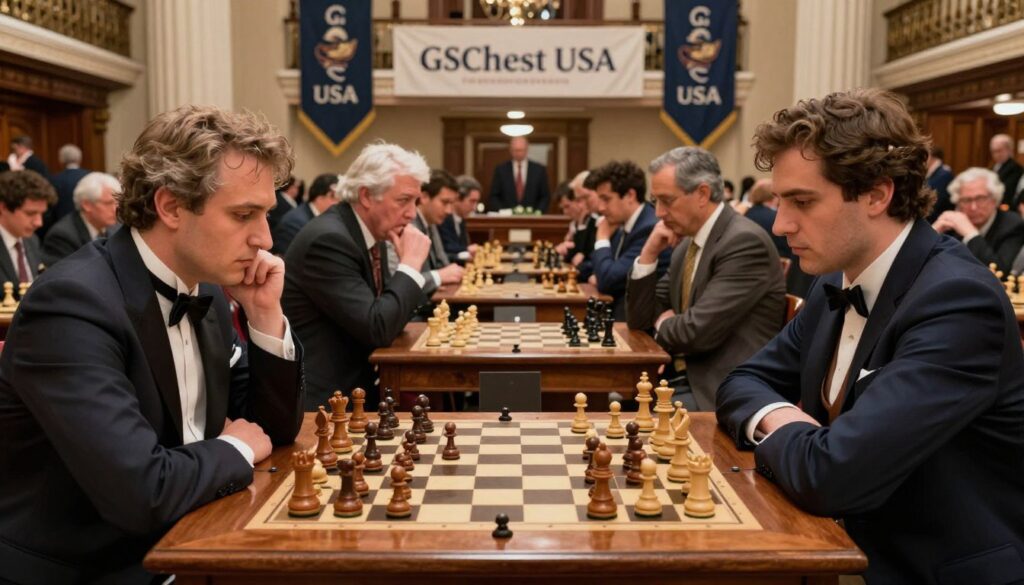
A historic chess tournament scene featuring elegantly dressed players at an ornate wooden chess table, showcasing a classic U.S. Open Chess Championship match. In the foreground, a close-up of a vintage chessboard with intricately carved pieces in mid-game, capturing the intense focus of the competitors. The middle ground displays a diverse audience of chess enthusiasts in professional attire, with expressions of intrigue and excitement. In the background, banners reading "GSChess USA" hang elegantly in a grand tournament hall filled with warm, ambient lighting that highlights the rich wooden textures and antique decor. The atmosphere exudes a sense of tradition, strategy, and passion for the game, emphasizing the championship's storied history.

Growth and Attendance Records

The tournament ballooned in size. A standout moment came in Pasadena, 1983, when 836 players filled the halls. Viktor Korchnoi was among the big names that year.

  • Rounds often decide titles with tense final games and occasional tie first outcomes.
  • The U.S. women’s events and class prizes widened access and boosted participation.
  • For full historical details and winner lists, this source is helpful.

Understanding Tournament Formats and Participation

Understanding how pairings and time controls work helps you play with more confidence. The U.S. event adopted the Swiss System in 1947. That system pairs players with similar scores each round. It lets hundreds compete in a single section!

Nine rounds are common. Recent events, like the 2015 edition, ran nine days with one round per day. Each round affects your rating. So every game counts toward final standings.
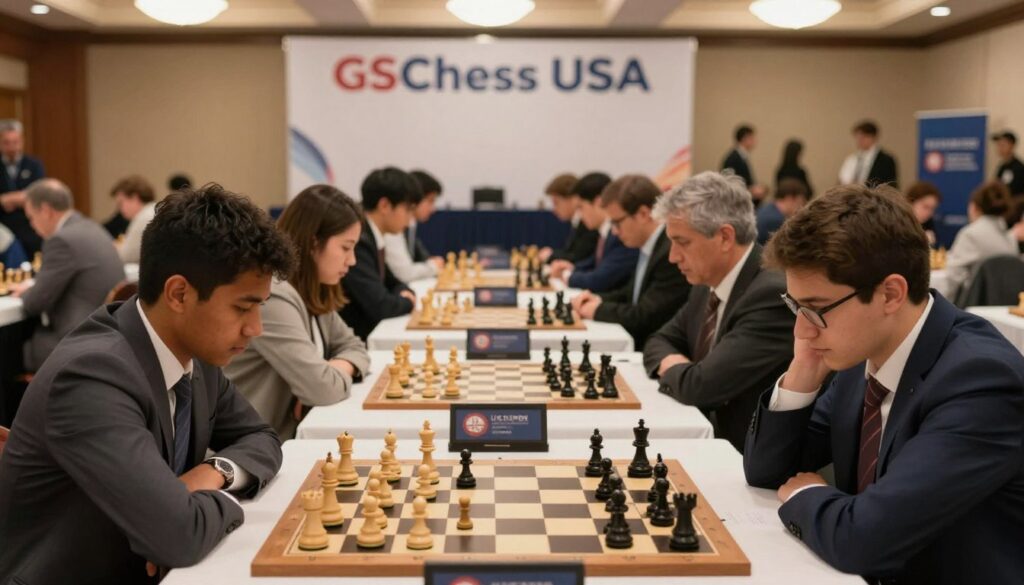
An engaging open chess tournament scene showcasing players deeply focused on their games at the U.S. Open Chess Championship. In the foreground, a diverse group of four players, two men and two women, all in professional business attire, study their chess boards with intense concentration. The middle ground features several chess tables filled with players, framed by a soft bokeh effect, suggesting a bustling atmosphere. The background displays a banner with “GSChess USA” above the tournament, while spectators watch in anticipation. The lighting is warm and inviting, resembling a well-lit hall with overhead lights casting gentle shadows, enhancing the competitive yet friendly mood. The image captures the spirit of high-stakes chess and the excitement of participants from various backgrounds coming together in this historic national open.

“The Swiss System keeps play fair and exciting by matching players by score.”

Quick tips:

  • Prepare for varied opponents each round.
  • Use time wisely—manage clocks and think ahead.
  • Track pairings and standings to plan your strategy.

We want you to feel ready! For more practical information, check our tournament FAQ. Whether you play in the united states or abroad, knowing the format lets you learn fast and enjoy your games!

Competitive Dynamics and the Path to the U.S. Championship

Competition heats up as players chase prizes, ratings, and a shot at national titles. The 2025 u.s. open in Middleton offers a $60,000 fund, with $10,000 for first place. That prize and the bonus chances make each round feel vital!
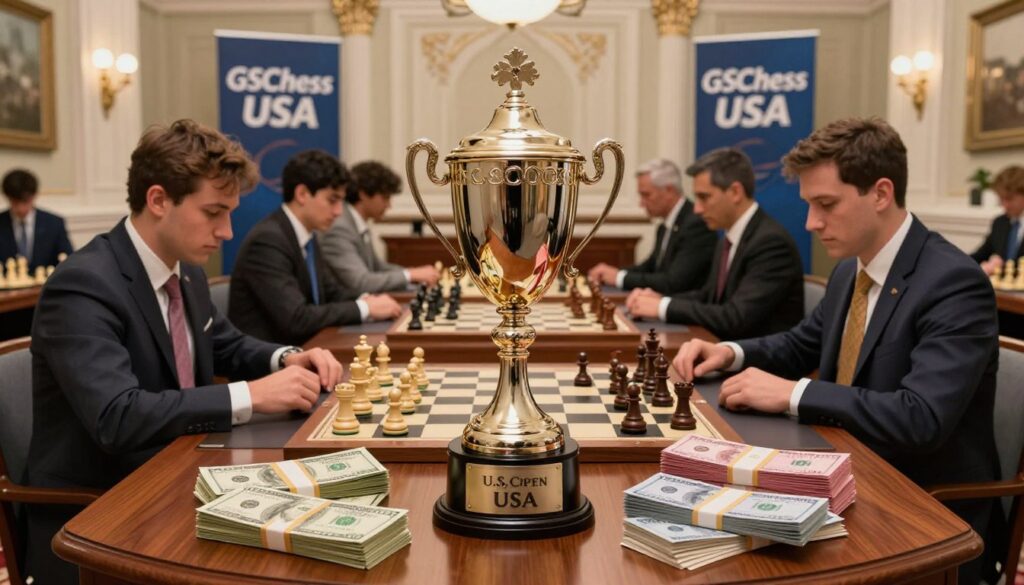
A visually striking image representing the U.S. Open Chess Championship prize fund, situated in a lavish, elegantly decorated chess hall. In the foreground, a gleaming, ornate trophy stands atop a polished mahogany table, surrounded by stacks of colorful prize money in denominations of $100 bills, symbolizing the competition's high stakes. In the middle, chessboards are set for intense matches, with players meticulously focused on their strategies, dressed in professional attire. The background features banners showcasing "GSChess USA" and delicate chess-themed decorations. Soft, warm lighting bathes the scene, creating an atmosphere of anticipation and intensity, while a shallow depth of field emphasizes the trophy, inviting viewers into the competitive spirit and prestige of the championship.

Time Controls and Scheduling

Fast clocks keep play lively. Typical time control guides each round. Organizers mix classical rounds with blitz tie breaks to decide ties quickly. That mix tests strategy and speed.

Prize Funds and Class Awards

Big funds reward many players. Middleton’s $60,000 fund contrasts with the St. Louis Chess Club’s $250,000 field for the 2025 u.s. championship. Class prizes and rating-based awards spread prizes across levels.

Qualifying for National Titles

Win the u.s. open and you can earn a berth in the top invitational. High ratings and wildcards also grant access to the big stage in St. Louis. For 2025 fields and qualifying details, check the official listing.

“Every game matters — each round shapes your rating and your chance at a title.”

Want coaching or strategy tips? Our partners and programs can help you prepare for intense rounds and prize play — see coach resources for study plans!

Conclusion: The Enduring Legacy of the National Open

The National Open remains a living tradition that teaches, unites, and excites players of all ages. We hope you enjoyed learning about this major chess championship and how it inspires communities across the United States!

From youth events to the main open chess championship, there are many ways to play and grow. We are proud to be your #1 resource for the details and information you need to begin your own journey!

Every tournament is a chance to learn. We will support you as you explore these events, including opportunities for women and students. For more event details, see what to expect.

Thank you for joining us. Play, learn, and have fun!

FAQ

What is the U.S. Open Chess Championship?

The U.S. Open is a long-running, open national event where players of all ages and ratings compete. It began as the Western Chess Association and grew into a premier open tournament held annually. Players can enter by registration and play in sections based on rating or in a fully open section.

Who can play in the event?

Anyone with a chess interest can join — from beginners to grandmasters. There are sections for different skill levels and often special prizes for juniors, seniors, and women. You just need to register, follow the entry rules, and show up ready to play!

How many rounds and what time control does the tournament use?

Most editions use nine rounds for the open section, with classical time controls like 90 minutes plus a 30-second increment per move. Organizers sometimes adjust time control, so check the event page for the exact schedule and any rapid or blitz side events.

How do prize funds and class awards work?

The prize fund includes top prizes for overall finishers and class prizes by rating bands. There are also trophies and cash for top junior, senior, and rating-group winners. Prize distribution and guaranteed minimums appear in the official prize list before the event.

Are there blitz or rapid events during the tournament?

Yes! Most events include side events like rapid and blitz tournaments and sometimes team matches. These are great for fun, extra prizes, and practice between standard rounds.

How do ties and tie-breaks get resolved?

Ties are often settled by tiebreak systems such as Sonneborn-Berger or Buchholz, and sometimes by playoff games for top places. The exact tiebreak rules are posted in the tournament regulations before play begins.

Can performance at the event help me earn titles or rating points?

Absolutely. Games are usually FIDE- and US Chess-rated, so you can gain rating points and, with strong results against titled players, earn title norms. Always confirm whether an event is norm-eligible in the official announcement.

How do I register and what are the fees?

Registration is done online through the official event website or the organizing federation’s portal. Fees vary by registration date, membership status, and section. Early registration often gets a discount, so sign up early!

Where are events usually held and when is the next one?

Locations rotate; recent host cities include major chess hubs like St. Louis and large convention venues across the country. Check the national federation calendar or official event site for the next location and exact dates.

What should parents know about bringing junior players?

Bring a coach or guardian if needed. Juniors should arrive early, know the schedule, and follow venue rules. Many tournaments offer student sections, scholastic-friendly schedules, and accessible resources for families.

How can I follow live games and results?

Organizers often provide live coverage on chess servers, official websites, and social media. Live boards, round reports, and PGN downloads let fans watch games in real time and review finished play.

Are there norms, bonus prizes, or special awards for women?

Yes. Many editions include performance bonuses, special awards, and separate top-prize categories for women and girls. Look at the prize list to see bonus prizes and special awards available that year.

What’s the best way to prepare for the tournament?

Practice with classical time control games, study opening plans, and do tactics daily. Get rest, plan travel, and arrive early to acclimate. Consider coaching sessions or joining a local club like Debsie classes for focused training!