Rockefeller Tournament of Elementary Champions: The National Stage for Young Stars

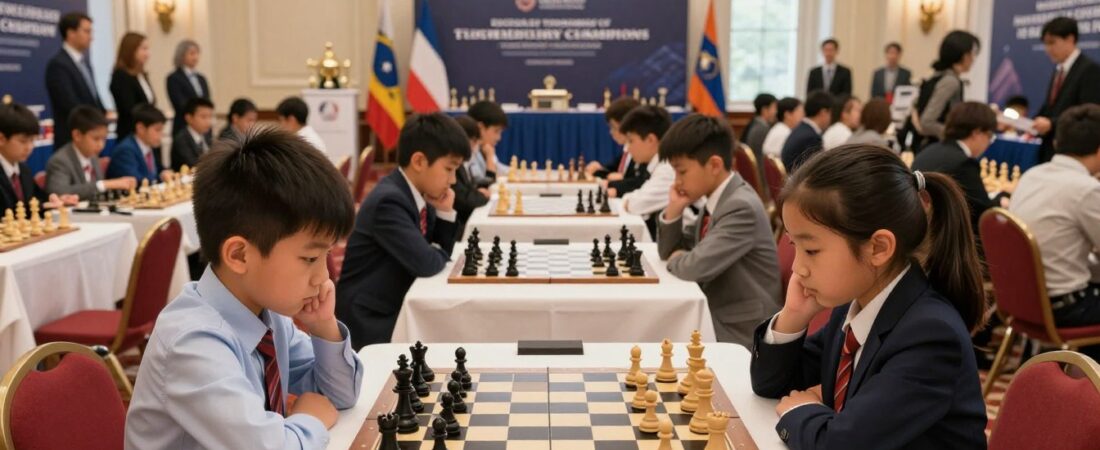
Can a single event change a young player’s path and spark a lifelong love for chess? We think yes! This national tournament brings K–5 state champions together for four electric days in Grand Rapids, Michigan, from August 3–6, 2026.

We welcome you to this john rockefeller iii inspired event where every move matters. Kids play with heart and learn fast! Parents cheer. Coaches smile!

As a major iii national tournament, it showcases top school state champions from across the United States. It’s a place to grow skills, make friends, and feel the thrill of competition in a safe, upbeat setting.

Debsie is excited to support young players with fun, caring coaching and learning tools that help them play, learn, and grow!

Key Takeaways

  • Event dates: August 3–6, 2026 in Grand Rapids, Michigan.
  • Top school state champions in K–5 compete in a national tournament.
  • John Rockefeller III legacy inspires sportsmanship and learning.
  • Debsie offers supportive, gamified coaching for young chess players.
  • Learn more local news and participant updates at OSCF news.

Understanding the Rockefeller Tournament of Elementary Champions

Here, bright young players from across the nation gather to play smart and have fun! This national tournament elementary event lets each state affiliate send one top kid to compete for a big title.

Debsie is the #1 Chess Class Provider and we are thrilled to guide you through every school state challenge. We help you prepare with short lessons, practice games, and friendly coaching that boost confidence and skill.
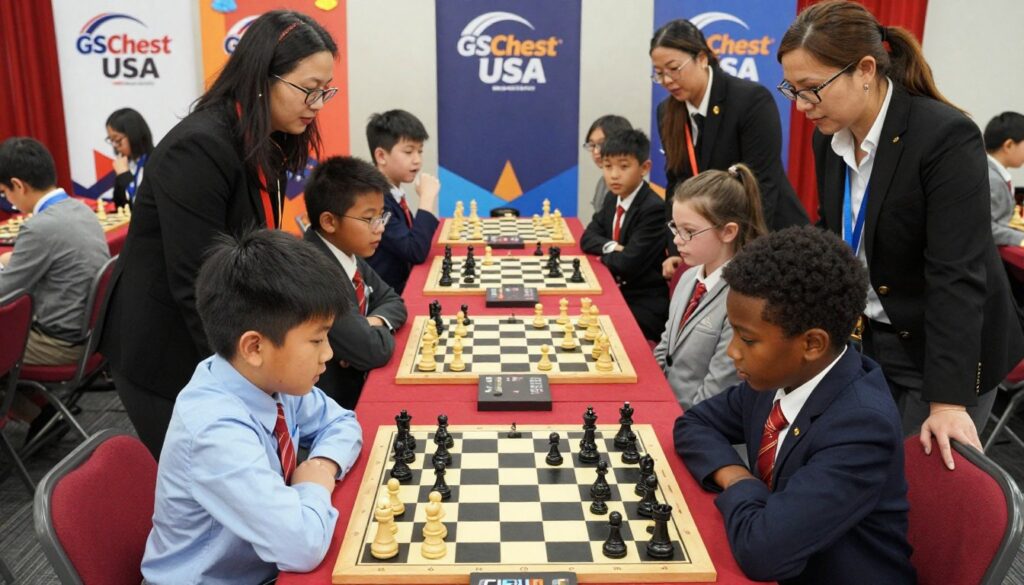
A vibrant scene depicting the Rockefeller Tournament of Elementary Champions, showcasing a diverse group of enthusiastic children aged 8-12 in professional attire, engaged in a spirited chess match. In the foreground, two young players, one Asian and one Black, focused intently on the board, with chess pieces meticulously arranged between them. In the middle ground, other competitors are seated, each showing varying expressions of concentration and excitement, while adults in professional attire supervise closely, encouraging the players. The background features banners for "GSChess USA" and colorful decorations celebrating the tournament’s spirit. The lighting is bright and inviting, capturing the energy of the event, with a slight aerial angle for an engaging perspective that highlights the camaraderie and competitive atmosphere of the national tournament.

This tournament elementary school competition is free. Every state affiliate selects a nominee. That process makes sure school state champions represent their region well.

  • Play against peers from many events and states.
  • Learn new ideas in a fun, safe setting.
  • Grow as a player with support from Debsie and local affiliates.

Want details on qualifying and invites? Check the state champion invitationals guide for helpful context and next steps!

Eligibility and Competition Format for Young Stars

To qualify, you must win your state affiliate championship. This proves you are the top player in your region and earns a spot at the national tournament stage!
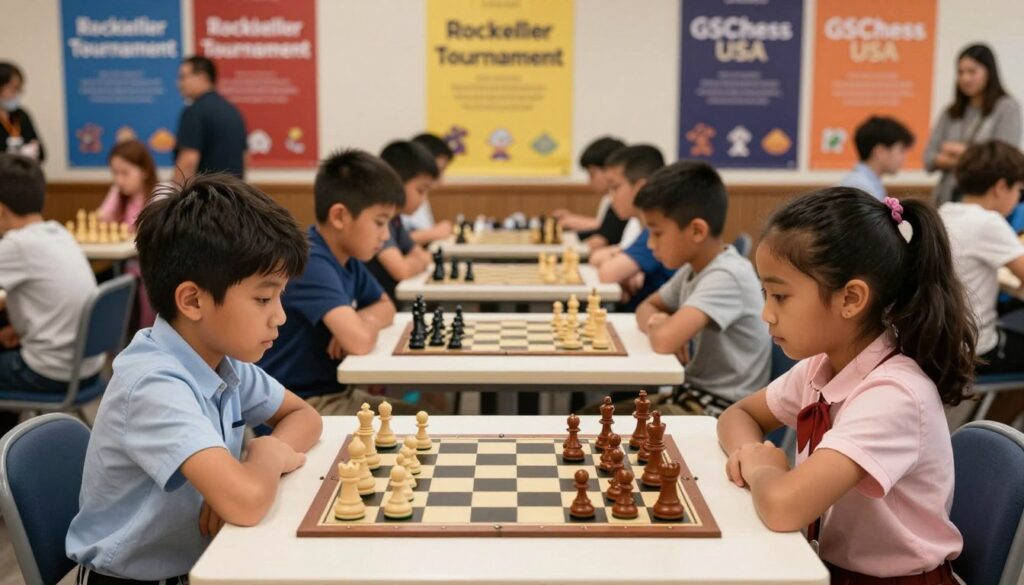
A vibrant chess tournament scene for young players, showcasing children aged 8-12 engaged in intense gameplay. In the foreground, two diverse young players, a boy and a girl, focused and determined, dressed in smart casual attire, are sitting across from each other at a chess table. The middle layer features a beautifully arranged chessboard with intricate pieces, while colorful banners and posters of the "Rockefeller Tournament" adorn the walls in the background, creating a competitive atmosphere. Soft, warm lighting highlights the players' expressions, while a slightly blurred crowd of parents and spectators can be seen, capturing the excitement. The brand "GSChess USA" prominently appears on banners. The mood is lively and inspiring, emphasizing the dreams of these young chess stars.

Qualifying for the National Stage

You qualify by being your school state champions winner or a state affiliate nominee. Co-champions may be recognized when ties happen. In 2025, co-champions included FM Ted Wang, FM Linxi Zhu, Santhosh Ayyappan, and WFM Aimee Yang!

Rules and Tie-break Procedures

Fair play matters. Standard match rules follow U.S. Chess and FIDE guidelines. Tie-breaks use Sonneborn‑Berger, head-to-head results, then most wins. We make sure every player knows the rules before play begins.

Pathways to World Youth Championships

Top finishers can earn spots at world youth and world cadet events if they meet U.S. FIDE flag rules. We guide players toward those qualifiers and bigger opportunities!

  • State winners advance to national play.
  • Top performers can enter world youth paths.
  • Coaches and chairs—like Mike Nietman—support every representative.
Level Typical Format Prize/Pathway Related Event
Elementary school state 5 rounds, Swiss National invite tournament elementary school
Middle school state 6 rounds, Swiss Champion list qualifiers tournament middle school / national tournament middle
High school state 7 rounds, Swiss Path to Arnold Denker & national spots tournament high school / tournament high

Want official invite details and tips for coaches? Check this guide to prestigious invitationals, the U.S. Chess invitational info, and expert coaching advice at GS Chess coaching tips.

The Legacy of the Rockefeller Family in Scholastic Chess

Generations of philanthropy have shaped today’s national scholastic chess events and opportunities for young players.

A recent $3 million gift via John Davison Rockefeller V expanded programs that lift kids from local play to national stages. This support backs the john rockefeller iii national effort and funds related events that reach middle school and high school players!
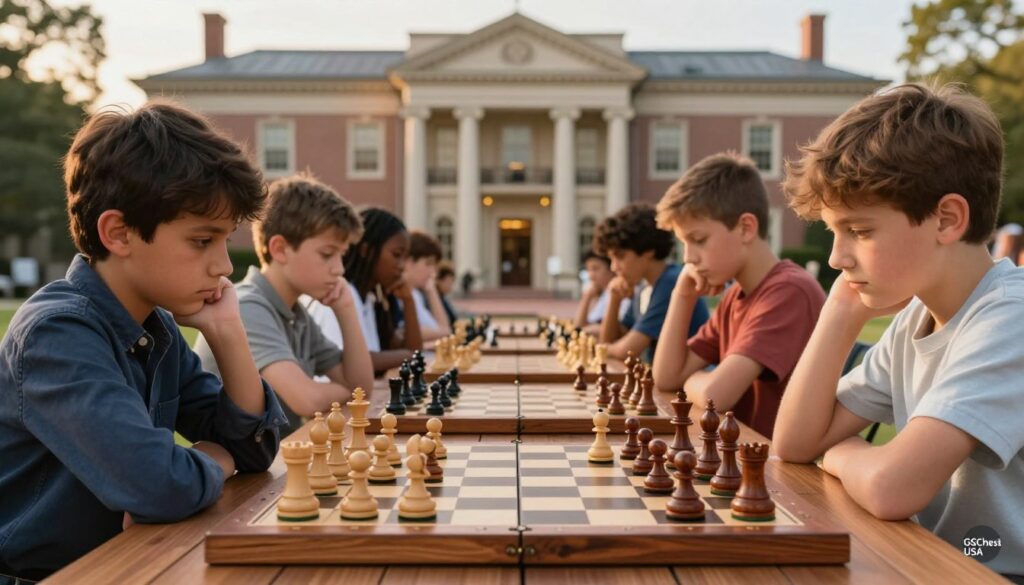
A prestigious chess tournament setting highlighting the rich legacy of the Rockefeller family in scholastic chess. In the foreground, a beautifully crafted wooden chessboard with intricate pieces made from exotic woods, gleaming under a soft, warm light, suggesting a moment of intense focus. The middle ground features a diverse group of children, aged around 10-12, engaged in deep thought and strategy, wearing modest smart-casual attire. In the background, a historic building symbolizing the Rockefeller family's contribution to education and chess, with elegant architecture bathed in the golden light of a late afternoon sun. Captured with a shallow depth of field to emphasize the players, this image should evoke a sense of legacy, inspiration, and dedication to the game. Include a subtle logo of "GSChess USA" in the corner without disrupting the composition.

Philanthropy and Future Initiatives

This funding does more than pay for trophies. It supports the Dewain Barber National event for middle school state winners and the Arnold Denker tournament high school competition.

Every state affiliate and representative gains new support. Scholarships and the John D. Rockefeller IV State Invitationals Scholarship Fund help qualifiers get to big events and world youth paths.

  • Stronger funding for state affiliates and players.
  • Scholarships for school state champions and representatives.
  • Clear pathways from middle school state play to tournament high options.

Read the full story in Chess Life and celebrate how this history fuels future events and growth for every young player!

Conclusion

Every great chess journey can start with one state win and a brave move at the board. Join this national tournament and play among top school state players! Be the player who learns, grows, and makes new friends. We cheer for every state champions representative and celebrate every bold game.

Keep aiming high! Explore event rules and details in the official event rules. With hard work you could reach world youth paths, the Arnold Denker or a tournament high school stage. Thanks for being part of this community—see you at the next championship U.S. event and in the pages of Chess Life!

FAQ

What is the Rockefeller Tournament of Elementary Champions?

The Rockefeller III national event is a major scholastic chess competition for elementary school players. It brings state champions and top qualifiers together for a national stage where young players compete, learn, and grow. Debsie proudly supports students preparing for events like state championships and the national tournament!

Who can enter and how do players qualify?

Entry is open to elementary school students who win or qualify through their state affiliate events and school state championships. Qualifiers often include state champions, top finishers at regional scholastic tournaments, and players selected by their state affiliate. Many pathways exist from local scholastic play to the national level.

What is the competition format and schedule?

The event usually runs over several rounds using Swiss pairing. Time controls and round counts vary by division. Organizers publish the schedule and rules in advance. Players should check with their state affiliate or the event website for exact times and divisions.

How are ties resolved in final standings?

Tie-break procedures follow standard scholastic rules, often using Buchholz, Sonneborn-Berger, or head-to-head results. Organizers list tie-break methods before the event. Coaches and parents should review these rules so players know what to expect.

Can winners advance to international events like the World Youth Championships?

Yes. Top performers may earn invitations or qualifying spots for events such as the World Youth Championships. The exact pathway depends on national selection rules and collaboration with U.S. chess authorities and state affiliates.

What role did John D. Rockefeller III and his family play in scholastic chess?

John D. Rockefeller III and his philanthropic efforts helped fund and promote youth chess programs, boosting scholastic events and supporting future initiatives that grow the game. Their legacy includes scholarships, event sponsorship, and partnerships that expanded access to chess for children.

Are there scholarships or special programs for participants?

Many events offer awards, scholarships, and invitations to higher-level competitions. State affiliates and national partners sometimes provide funding or travel grants for top players. Check event notices and sponsor pages for the latest opportunities.

How can parents and coaches prepare kids for the event?

Focus on regular practice, friendly tournaments, and learning practical opening, middlegame, and endgame skills. Use gamified lessons, puzzles, and simulated tournament play. Debsie offers structured classes and leaderboards to help kids gain confidence and enjoy learning!

Where can I find official rules, schedules, and player lists?

Official information is posted by the event organizers and state affiliates. Look for event bulletins, registration pages, and published pairings. Chess Life and national chess organizations also list qualifiers and champion lists after the event.

How does my state affiliate handle registrations and qualifications?

Each state affiliate sets its own qualification procedures, registration deadlines, and fees. Contact your state chess federation or visit their website for clear steps on registering, qualifying, and receiving representative slots for the national stage.