National K-12 Chess Championship: The Biggest Stage in Scholastic Chess

Ready to see young stars shine on the biggest scholastic stage? What makes this gathering so electric, and how can you get the most from the weekend?

We are thrilled to help you prepare! Debsie, the #1 Chess Class Provider, cheers every student who plays and grows. This high school event gathers top young players from across the United States.

Mark your calendar: the 2026 High School (K-12) National Championships run March 27–29, 2026. For full schedule and tournament details, check the official event calendar on the US Chess website.

We’ll guide you through the logistics, prep tips, and how to enjoy the weekend. Want classes that build confidence? Explore Debsie’s programs for every level here!

Key Takeaways

  • The 2026 high school championship is March 27–29, 2026.
  • Debsie offers tailored classes to prep players at every level.
  • Visit the official website for full schedule and logistics.
  • We focus on growth, fun, and strong competition!
  • Plan early to make the weekend smooth and memorable.

Preparing for the National K-12 Chess Championship

A little planning today means big confidence at the tournament! Pack early, check schedules, and map your route to the Sheraton Grand Chicago at 301 E. North Water St., Chicago, IL 60611. This venue puts you in the heart of the city and among hundreds of other players for a lively event.
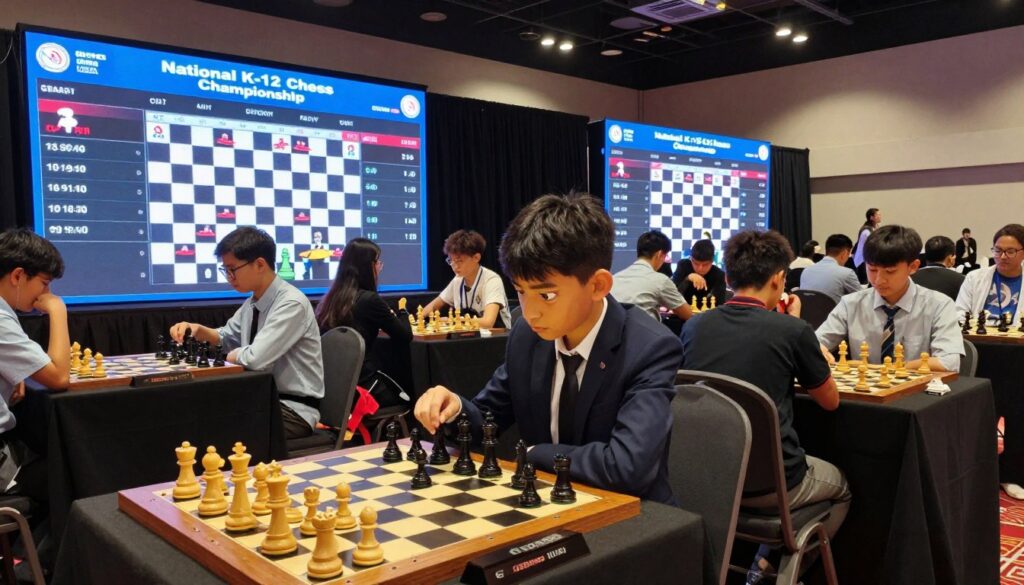
A dynamic chess arena set in a spacious convention hall for the National K-12 Chess Championship, focusing on prominent digital displays showcasing chess ratings. In the foreground, an elegant, wooden chessboard with meticulously crafted pieces, conveying a sense of strategy and competition. The middle ground features a diverse group of young chess players, aged 8 to 18, dressed in smart casual outfits, intently analyzing their game, representing various backgrounds. In the background, large LED screens brightly illuminate the setting with live ratings and player statistics, creating an energetic atmosphere. Soft overhead lighting enhances the concentration of the players while maintaining a warm ambiance. The overall mood captures excitement and preparation for the championship. The branding "GSChess USA" is subtly incorporated into the background displays, harmonizing with the championship theme.

Understanding Rating Reviews

Your rating matters. Each player’s rating will be reviewed by the official Rating Review Group under US Chess Scholastic Rules and Regulations. That review ensures fair sections and clean pairings for everyone.

Check the official ratings and recommendations the week before the event. That info helps you see how your standing affects section placement and strategy.

Planning Your Travel and Logistics

Book rooms near the Sheraton Grand Chicago early for convenience. Travel planning eases stress and keeps your focus on play and growth!

  • Tip: Review posted ratings before you leave.
  • Tip: Bring team spirit—these high school events help you learn and grow.
  • Need more prep? See our get-ready guide for practical checklists and timelines.

Navigating the Registration and Badging Process

Registering early saves money and stress—let’s walk through the steps!

Know the deadlines: Entry fees are $105 if you register by 2/16/2026. Prices rise to $160 by 3/2/2026, $235 by 3/16/2026, $360 by 3/27/2026, and $400 on-site until 10 a.m. Friday, 3/28/2026.

Managing your entry is simple when you plan. Visit the official registration page on the registration website to secure your spot. No phone entries are accepted for this major high school event!

Badges are required to enter the defined playing area. Each participant may bring one Accompanying Person to support them during the tournament.

  • Tip: Register by 2/16 to save—$105 is the best rate!
  • Note: Roster or section changes after 2/16/2026 carry a $40 service charge.
  • Reminder: Read all registration information carefully to avoid last-minute issues.
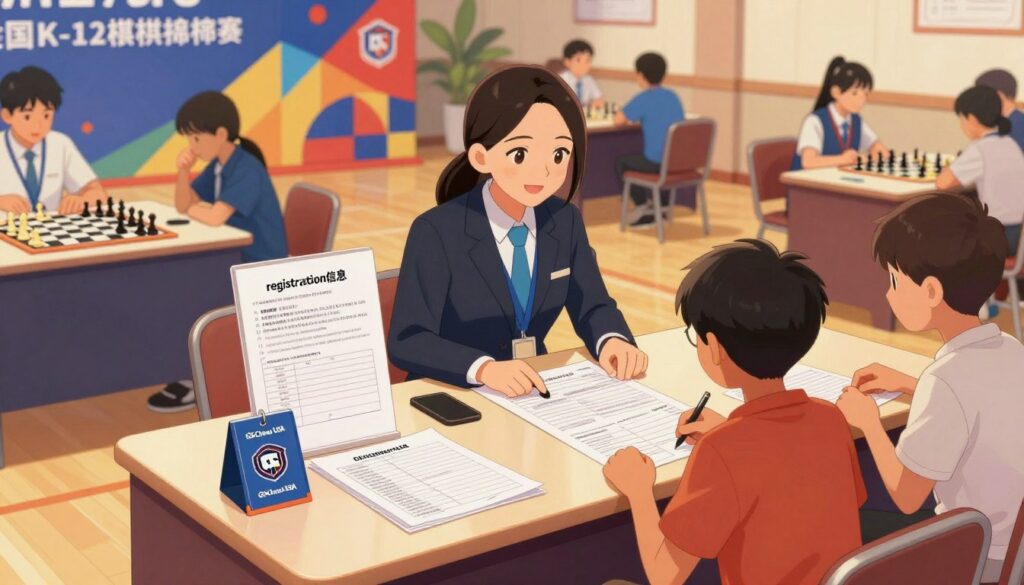
A dynamic scene illustrating the "registration information" for the National K-12 Chess Championship, featuring a polished registration desk prominently in the foreground, where friendly personnel wearing professional attire assist young chess players. The middle ground includes well-organized registration forms and badges featuring the brand "GSChess USA", displayed with clarity. The background reveals a vibrant chess tournament setting with colorful banners, chessboards, and excited participants. Warm lighting creates an inviting atmosphere, emphasizing the hustle and bustle of anticipation and camaraderie. A slight aerial angle captures the action and excitement while maintaining a focused view on the registration process, conveying a sense of professionalism and enthusiasm for the event.

Follow the badging steps and you’ll have a smooth arrival and a fun weekend of play!

Essential Rules and Tournament Conduct

A safe, fair playing space starts with every coach, parent, and student knowing the rules! Be ready to follow clear standards so the event runs smoothly and everyone has fun.

“SafeSport training is a critical step in keeping our chess community safe and welcoming for everyone!”

— Karen Pennock, NTD, IA

All participants must follow the 2025-26 US Chess Scholastic Rules and Regulations for the full duration of the tournament. Good conduct matters as much as your rating. Treat opponents and officials with respect and kindness!
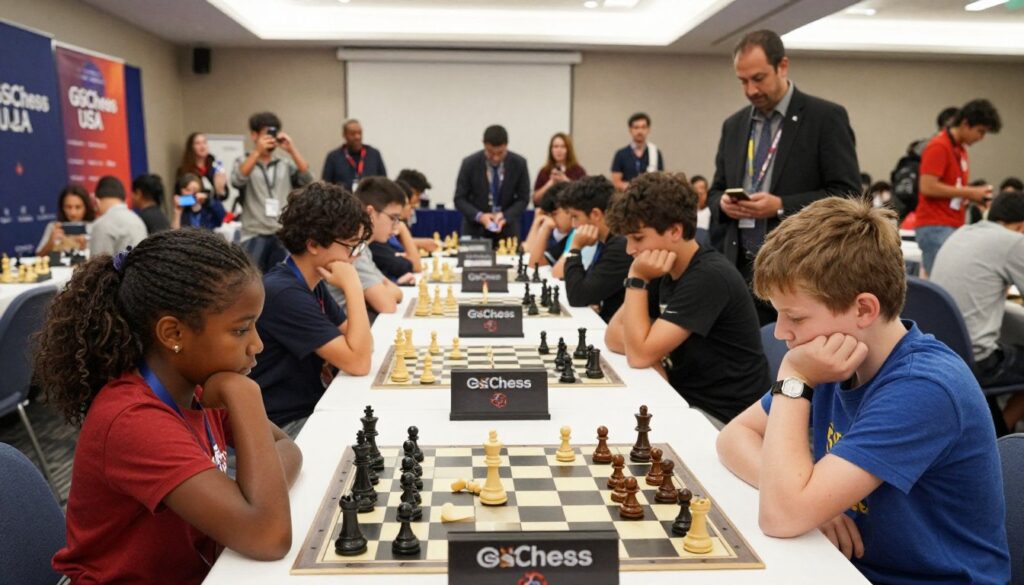
A dynamic chess tournament scene showcasing young players engaged in competitive matches at a prestigious venue, such as a large conference room adorned with banners of "GSChess USA." In the foreground, two focused students, one African American girl and one Caucasian boy, are intently analyzing their chessboards, with pieces meticulously arranged. The middle ground features several other players deep in thought, surrounded by parents and coaches, discussing strategies in a supportive environment. The background is a blurred array of spectators capturing the moment with smartphones, while bright overhead lights illuminate the scene, creating a vibrant atmosphere filled with excitement and concentration. The composition captures a sense of professionalism and the essence of scholastic chess competition.

Requirement Why it matters Where to find information
Follow scholastic rules Ensures fair pairings and play US Chess scholastic rules
Complete SafeSport training Keeps kids safe and supported Guidance from officials and coaches
Respect and sportsmanship Creates a positive experience at events Debsie programs
Ask when unsure Clears rules questions fast Check official materials and staff

Play fair, learn, and grow! By following these rules you help everyone enjoy the event and gain skills from the experience.

Conclusion

Feel excited—this event is a chance to grow, meet friends, and play smart! You’ve read the key steps to plan travel, register on time, and follow the rules. Small prep makes a big difference.

Debsie supports your journey every step of the way. We cheer on every student who learns, plays, and improves with us!

Check the latest online event details for updates and deadlines. Keep this guide handy for quick information before you go.

Play hard, have fun, and be proud. See you at the championship—shine bright and enjoy the events!

FAQ

What is the National K-12 Chess Championship: The Biggest Stage in Scholastic Chess?

It’s the premier scholastic event where students from elementary through high school compete over several rounds! Players test skills, earn recognition, and meet peers who love the game. Debsie proudly supports young players with coaching and prep resources to help them shine.

How should I prepare for the National K-12 Chess Championship?

Start with a study plan! Practice openings, tactics, and endgames. Play rated games online and in local clubs. Work with a coach or take Debsie classes to build confidence and game habits. Rest well the night before and bring snacks, water, and a clear mind.

What is a rating review and why does it matter?

A rating review checks a player’s official rating before the event to place them in the right section. It affects pairings and prizes. Make sure your USCF or other federation profile is up to date and submit any rating disputes early.

How do I plan travel and logistics for the event?

Book hotels near the venue early, check arrival times, and map out transit. Pack essentials: scorebook, pens, ID, mask if needed, and snacks. Plan for weather and downtime. Ask your school or coach about group travel options.

How do I register and get a badge for the event?

Register online through the event website before the deadline. After payment, you’ll receive confirmation and badge pickup instructions. Bring ID and registration confirmation to badge pickup—some events allow parents to pick up for minors.

What are the entry fees and important registration deadlines?

Fees vary by section and date of purchase. Early-bird rates save money, while late entries can cost more or be closed. Check the event site for exact dates and fee schedules, and pay promptly to secure your spot.

What rules should players and parents know about tournament conduct?

Follow the event’s rulebook and a calm, respectful tone. No coaching during games. Silence devices and avoid disturbances. Unsportsmanlike behavior can lead to penalties. Learn basic etiquette: offer a handshake, record moves, and keep the board area tidy.

Are there special sections for different age or grade levels?

Yes—sections are typically divided by grade or rating so players face peers of similar strength. Check the entry pages for elementary, middle, and high school divisions, plus any novice or unrated sections.

Can players use electronic devices or chess engines during the event?

No. Electronic devices and chess engines are strictly prohibited in playing areas. Devices must be turned off and stored away to prevent violations and disqualification.

How are ties and prizes handled?

Tiebreak systems like Buchholz or Sonneborn-Berger decide final standings when scores match. Prize lists and scholarships are posted before the event. Winners may receive trophies, medals, or scholarships depending on the organizer.

What support is available for new competitors?

New players can find beginner guides, practice events, and coaching. Debsie offers friendly classes and mock tournaments to build comfort and skill. Event volunteers and arbiters are also available on-site to help.

Where can I find official event updates and results?

Check the official event website and social channels for live updates, pairings, and final standings. Many tournaments post results on federation platforms and third-party pairing services.