National High School Chess Championship: America’s Top Teen Teams and Players

Ready to see which teen players will surprise everyone this year? This is your invite to the biggest youth tournament of the season. We welcome young minds from across the United States to play, learn, and grow!

Debsie, the #1 chess class provider, helps you train with fun lessons and game drills. Join us to find clear information on schedules, awards, and preparation tips. We cover each event so you know when to arrive and what to expect.

Beginner or pro — everyone gets a chance to shine. Meet new friends, test your strategy, and enjoy a supportive community. Learn more about our programs on the about us page.

Key Takeaways

  • The National High School Chess Championship brings top teen players together.
  • Debsie offers #1 training to help you prepare for tournaments.
  • Find essential event information, schedules, and awards here.
  • All skill levels can compete, learn, and make friends.
  • Plan your time and arrive ready to play and grow!

Understanding the National High School Chess Championship

The event draws team and individual players from across the country for a big weekend of matches. It’s a lively gathering of talent and learning. Players of many levels meet to compete, observe, and grow!

Event Overview

When and where: The 2027 K-12 competition runs April 2–4 at the Renaissance Schaumburg Convention Center Hotel in Schaumburg, IL. US Chess organizes national events like the Elementary, Middle School, and high school championships, so the schedule is well coordinated.
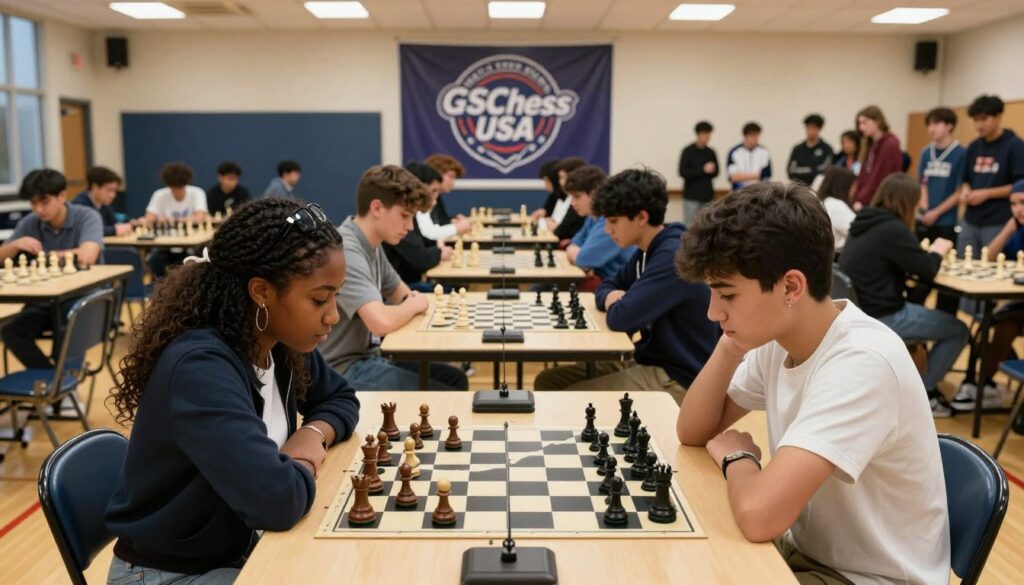
High school chess players intensely focused during a championship match, set in a well-lit school gymnasium. In the foreground, two diverse teens, a Black girl and a Hispanic boy, are deeply engaged in a game, each wearing smart casual clothing. A chessboard is positioned between them, with pieces in mid-game. In the middle ground, a small group of students are gathered, watching the match with anticipation, while others are seated at tables, studying chess strategies. The background features banners with the logo "GSChess USA" and energetic spectators. The scene is illuminated with soft overhead lights, creating a warm and competitive atmosphere. Capture the excitement and concentration, using a wide-angle lens to encompass the entire chess event.

Registration and Membership

Ready to play? You must register for the 2027 K-12 event and keep your US Chess membership active. Membership unlocks official entry, pairing info, and eligibility for awards.

“Make sure your profile is up to date before you head to the playing hall!”

  • Register early to secure a spot for team or individual play.
  • Middle school events run alongside so younger players can gain experience.
  • Membership updates ensure you receive the latest tournament information.

For full registration details and timeline, see the 2026 event preview.

Tournament Formats and Scoring Systems

Tournament days move fast: seven rounds pack intense play into three action-filled days. Each round tests focus, time management, and choice of openings.
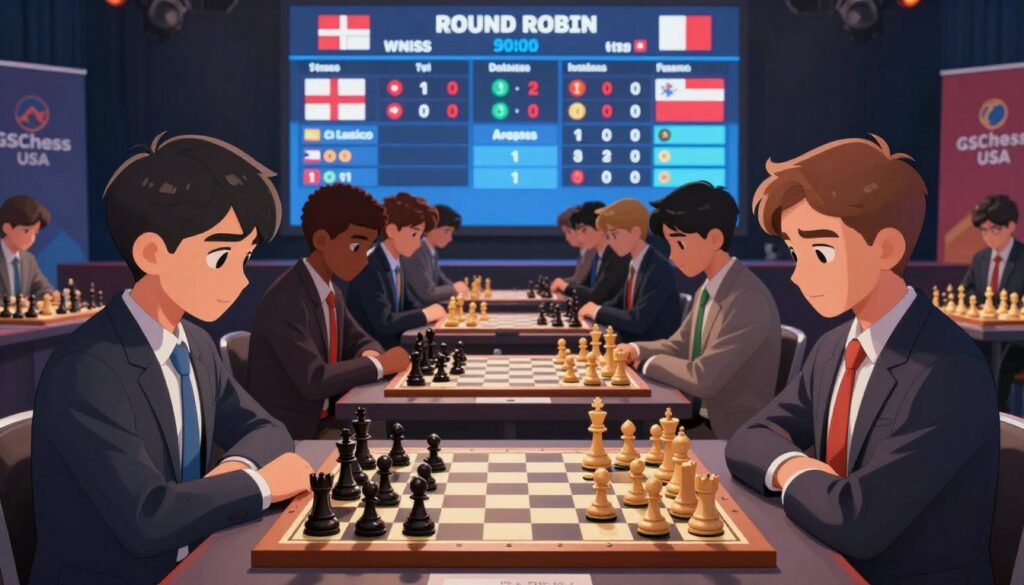
A vibrant illustration depicting tournament formats and scoring systems in chess, framed within a professional chess tournament setting. In the foreground, a sleek chessboard showcases various chess pieces positioned for play, some in mid-game. The middle ground features a diverse group of young players, dressed in professional business attire, deeply focused on their matches, their expressions reflecting concentration and strategy. In the background, a digital scoreboard displays various tournament formats, such as Swiss and Round Robin, with visual cues for scoring systems, like points and rankings. Soft, focused lighting highlights the chessboard and players, creating an intense yet motivational atmosphere. Colorful banners with the brand name "GSChess USA" can be seen subtly integrated into the scene, maintaining a professional appearance without distractions.

Scoring is straightforward. A win gives one point. A draw is half a point. A loss gives zero. Keep this in mind — every result changes standings!

Team scoring matters: the four highest scoring players from a school are added for the team total. That makes depth just as important as a top board.

  • Most tournaments use seven rounds over three days to decide final rankings.
  • Check the official list of pairings to know your next opponent and plan your strategy.
  • Your rating helps match you to similar skill levels and track progress over time.

“Every round is a new chance to learn and improve your game!”

We want you to enjoy the event and play with confidence. Debsie is #1 for training that helps players prepare, manage time, and aim for awards with smart play!

Essential Strategies for Competitive Success

Strong match results follow steady preparation, calm nerves, and good clock habits. These tips help players gain an edge at events and feel ready for each round!
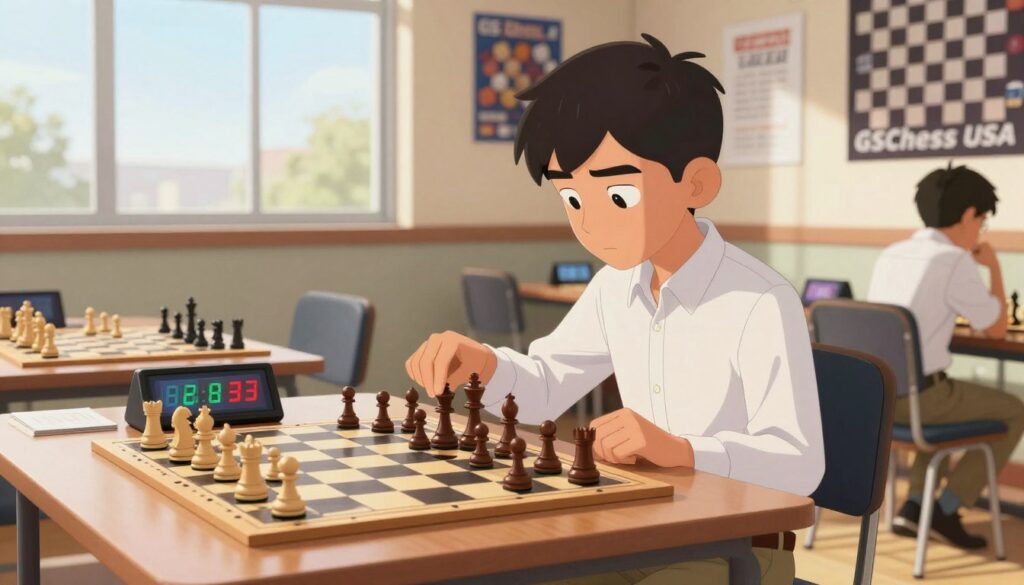
A focused high school chess player practicing time control strategies in a well-lit indoor chess training room. In the foreground, a teenage boy in a neatly pressed button-up shirt and slacks is intently analyzing a chessboard, with a digital chess clock showing running time beside him. The middle ground showcases a few scattered chess pieces and instructional books on strategy. In the background, a large window allows natural light to flood in, creating a warm and inviting atmosphere. The overall mood is one of concentration and determination, indicative of the competitive spirit in chess. The room is decorated with motivational chess posters, including the brand "GSChess USA" prominently displayed. The camera angle is slightly tilted for dynamic perspective, evoking a sense of urgency and focus on mastering time management in chess.

Mastering Time Controls

Manage your clock like a coach. Practice with the same time settings you will face in a tournament.

  • Use increments: avoid flagging by moving faster in simple positions.
  • Plan before the opponent moves to save seconds.

Analyzing Past Games

Review lost and won games to spot repeating mistakes. Focus on tactics and endgame choices.

We recommend studying top players and using drills. For prep tips, see preparing for tournaments.

Mental Preparation and Safe Play

Rest, routine, and respect matter! Get sleep, eat well, and arrive early. Keep sportsmanship strong to make the event fun for everyone.

US Chess requires SafeSport training so players from every school can compete in a safe space. For coaching advice, check mastering coaching tips.

The Evolution of Scholastic Chess in America

The Fischer Boom of the 1970s changed everything! It sent kids, parents, and teachers to clubs and tournaments. Play moved from basements to auditoriums. Interest grew fast and stayed strong.

The Impact of the Fischer Boom

Key milestones:

  • Bill Goichberg organized the first national high school event in 1969. John Watson won that inaugural tournament!
  • Evanston Township dominated in 1972, 1973, and 1974, showing how teams could build lasting programs.
  • By 1997, SuperNationals I drew 4,298 players to one mega event — a record turnout!

Membership and club networks expanded. More middle school and high school players joined. Today’s events stand on the work of early pioneers.
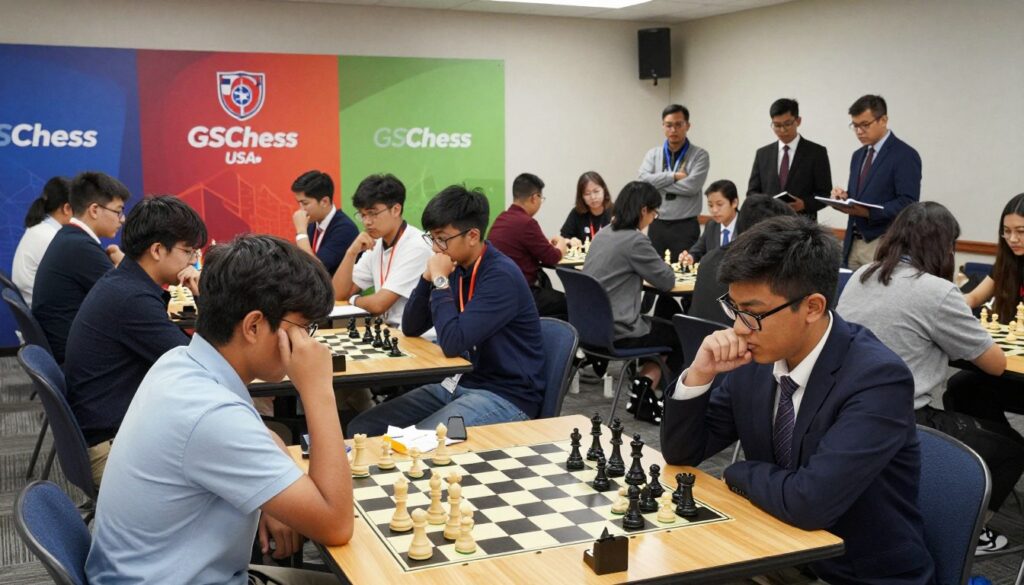
A vibrant chess tournament scene featuring a diverse group of high school students engaged in intense matches, showcasing a mix of eagerness and concentration. In the foreground, two players sit at wooden chess tables, deeply focused, one adjusting their glasses, the other biting their lip, dressed in smart casual attire. In the middle ground, a small crowd of peers and coaches watches attentively, some taking notes, others whispering strategies, emphasizing the collaborative spirit of scholastic chess. The background features colorful banners with the logo "GSChess USA" and bright lights illuminating the room, enhancing the competitive yet supportive atmosphere of the National High School Chess Championship. Use a wide-angle lens to capture the depth and excitement of the tournament, evoking a sense of camaraderie and passion for the game.

“Every modern tournament traces roots back to these early years of explosive growth!”

Explore more about this history on the history of scholastic chess.

Conclusion

Your next tournament can be the moment you level up as a player and teammate. Play, learn, and enjoy the journey! Keep your goals clear and your routine steady.

Whether you represent a school or compete as an individual, these events offer time to grow and chances to win awards. Keep your membership active and check the official event results and dates for the latest information.

Work on your rating and play a few practice matches each week. For coaching, drills, and lessons that help players improve, see Global School of Chess USA.

We are so proud of every player who steps up to the board! See you at future championships — and bring your best game!

FAQ

What is the event about?

This tournament brings together top teen teams and players from across the country to play competitive scholastic matches. It highlights team rivalry, individual skill, and awards for various sections and ratings. We celebrate growth, learning, and sportsmanship in a fun, high-energy setting!

Who can register to play?

Any eligible student from grades 9–12 may join, provided they meet the event’s school and age rules. Coaches or parents usually handle registration. Membership in some chess organizations may be required for pairing and rating purposes. Check the official rules for team size and eligibility.

How do I register my team or player?

Registration typically opens online. You’ll create a team roster, enter player details, and pay fees. Schools often register directly, but independent players can join through their school or local club. Early sign-up helps secure spots and any discounted rates.

What formats and scoring systems are used?

The event uses team and individual Swiss or round-robin formats, depending on entries. Scoring combines match points and board points. Time controls vary by section—common setups include rapid and standard clocks. Tie-breaks follow established systems like Buchholz or Sonneborn-Berger.

What time controls should players expect?

Expect a mix of rapid and classical controls. Many sections use 90 minutes plus increment for each player, while faster rounds may use 25–45 minutes with increment. Always check the published schedule so players can practice the exact timing.

How can players prepare strategically?

Focus on opening basics, endgame patterns, and tactical drills. Analyze past games from the event and simulate time controls. Practice with teammates, use puzzles daily, and review common middle-game plans. Mental stamina and routine are key for multi-round days.

Are there awards and rating prizes?

Yes! Awards include team trophies, individual medals, and rating-based prizes. Sections often have top-board recognition and performance trophies. Players may also earn rating changes from their US Chess-affiliated games.

What role did the Fischer boom play in scholastic chess?

The Fischer boom sparked major growth in youth chess across the country. It boosted club formation, school programs, and tournament interest. That legacy still shapes how teams train and how events attract young players today.

How do coaches and parents support mental preparation?

Keep routines steady—sleep, nutrition, and light exercise. Use short relaxation techniques between rounds. Encourage focus on one game at a time and celebrate improvement. Positive support helps kids stay confident and enjoy the event.

Where can I find past results and game scores?

Organizers and national chess bodies post archives of results, standings, and PGN files. Local clubs and school programs also keep records. Reviewing past games is a great way to learn and spot trends in openings and strategy.

Is there middle school or other scholastic divisions?

Yes. Many events include junior, middle school, and open sections to match age and rating levels. These divisions help ensure fair competition and encourage budding players to grow through age-appropriate play.

Do I need membership in a chess organization to play?

Often yes. Many tournaments require membership in a national affiliate to receive official ratings and be eligible for certain awards. Check the event’s registration page for exact membership and rating requirements.

What should players bring to the venue?

Bring a reliable chess set and scoresheets if required, a clock if not supplied, school or team ID, snacks, water, and a charged device for digital pairings if used. Comfortable clothing and a small cushion help for long rounds!

How do rating changes work at the event?

Games played under an approved rating system affect a player’s national rating based on opponents and results. Higher-rated wins yield larger gains. Check the event’s rating affiliation to know how results will be recorded.

Can independent players join without a school team?

Yes. Independent players can often register through local clubs or as unaffiliated individuals, then be assigned to a team or compete in individual sections. Confirm with organizers about team placement rules.

Where can I find resources to improve before the event?

Use online lessons, tactical trainers, game databases, and club coaching. Debsie, the #1 Chess Class Provider in USA and worldwide, offers personalized, gamified classes that help players learn fast and enjoy practice. Join a class for guided improvement!