
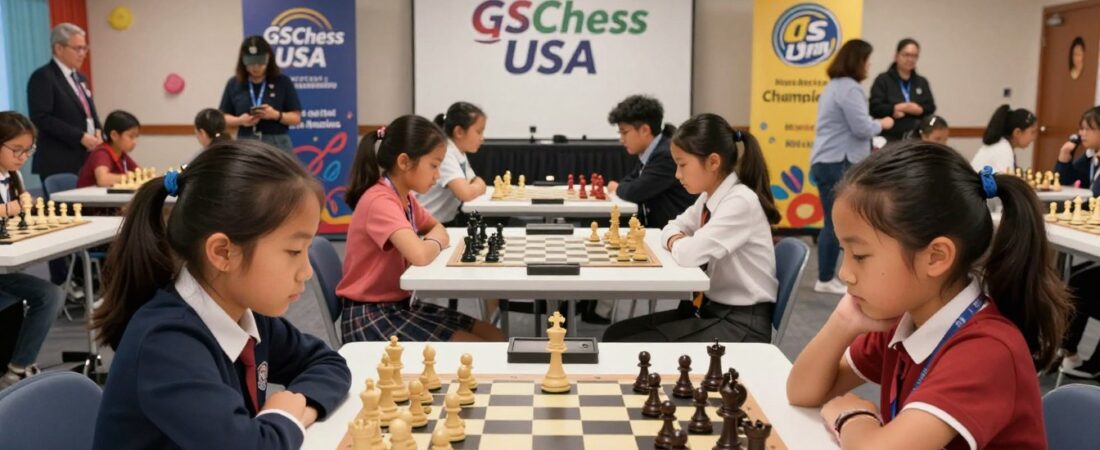
Haring Tournament of Girls State Champions: A Pathway for America’s Top Girls

Ready to see which young player will rise to become the next national champion? This event brings top K–12 girls from every state together to play serious chess in a fun, supportive setting! We welcome both seasoned competitors and newcomers who dream big.

The WIM Ruth Haring National Tournament of Girls State Champions takes place August 3–6, 2026, in Grand Rapids, Michigan. You’ll find clear registration steps, membership rules, and information to help every participant prepare. Every round boosts experience and can improve your rating!

Debsie, the #1 chess class provider worldwide, supports young players with coaching and resources. Need more details on event rules or past winners? Check the USCF state champion guide, read local recaps at Michigan Chess, or explore training options with top classes.

Key Takeaways

  • The national event runs August 3–6, 2026, in Grand Rapids, MI.
  • A valid US Chess membership is required to play.
  • Six rounds, classic time control, and awards for top finishers.
  • Every game helps a player grow their rating and skills.
  • Find registration and rules in the USCF guide and local updates.
  • Train with the #1 chess class provider to prepare and excel!

USCF State Champion Invitationals Guide

Michigan Chess news

Chess classes

Understanding the Haring Tournament of Girls State Champions

A celebration of legacy and learning, the competition highlights how chess builds future thinkers. It honors WIM Ruth Haring, a pioneer who grew opportunities for women in U.S. chess. Her work shaped scholastic chess and opened doors for young players everywhere!
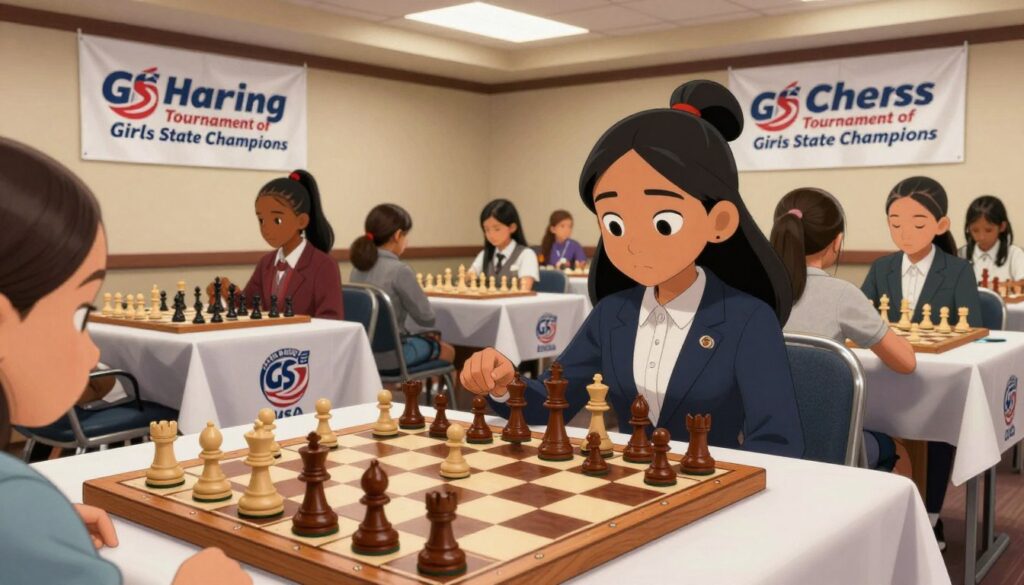
A vibrant scene capturing the essence of the Haring Tournament of Girls State Champions, featuring a diverse group of young girls passionately engaged in a chess match. In the foreground, a close-up of a polished wooden chessboard with intricately designed pieces, some in mid-move. The middle ground shows the focused expressions of the young players, dressed in professional business attire, sitting at elegantly arranged tables adorned with the logo "GSChess USA" on tablecloths. In the background, banners showcasing the tournament's name flutter, illuminated by soft overhead lighting that creates a warm, inviting atmosphere. The angle is slightly elevated to provide a panoramic view of the excitement and determination in the room, emphasizing the tournament's significance as a pathway for America’s top girls in chess.

The Legacy of Ruth Haring

Ruth Haring championed access, coaching, and events that helped players gain confidence. Read more about her life and impact on the game on her Wikipedia page.

Connecting Chess to STEM

Chess trains logic, abstract thinking, and patience. These skills link directly to STEM subjects and help students solve real problems.

  • $18,700 in total prizes supports achievement and growth.
  • The top prize includes a $5,800 scholarship to help a champion pursue school and chess goals.
  • State champions gain experience that boosts rating and tournament readiness.

Want prep tips and lesson ideas? Check training resources and recaps at GS Chess USA and see program highlights at SCScholastic!

Qualification Pathways and Eligibility Requirements

Each state selects one K–12 representative to carry its flag at this national scholastic chess event. We want bright players who love to learn and compete! The process is simple and fair.
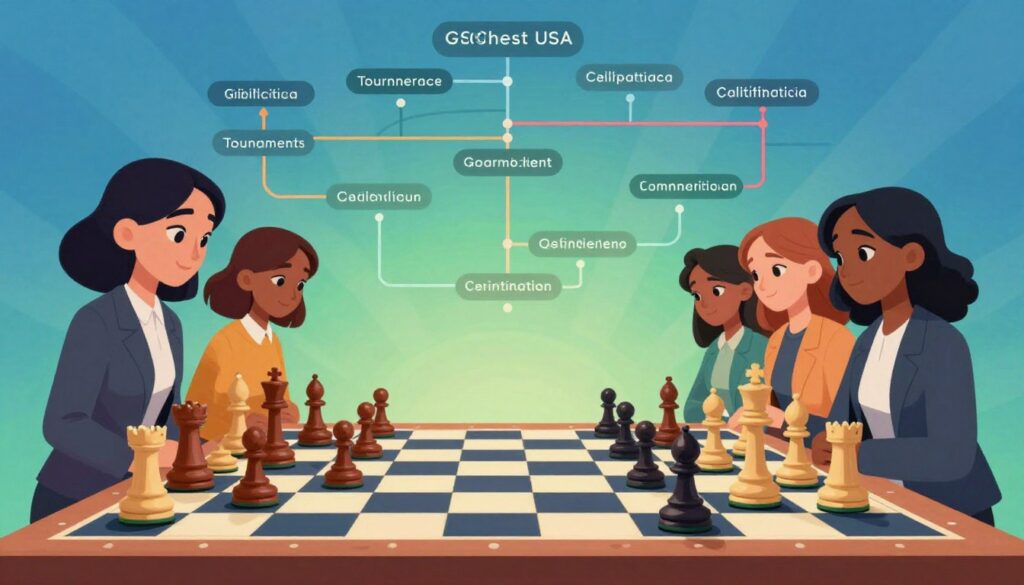
A dynamic representation of a vibrant chessboard featuring elegantly designed chess pieces, set against a richly colored backdrop symbolizing qualification pathways in chess. In the foreground, a standard chessboard with pieces represented as diverse girls and young women in professional business attire, strategically positioning themselves around the board, embodying the essence of competition and teamwork. In the middle ground, an abstract interpretation of a pathway with arrows and indicators symbolizing various qualification routes, like tournaments and eligibility criteria, flowing upward. The background is a soft gradient of blues and greens, evoking a sense of focus and ambition. The lighting is bright and motivational, creating a hopeful atmosphere, enhancing the empowerment spirit. Include the brand name "GSChess USA" subtly integrated into the artistic design.

State Affiliate Nominations

Each state affiliate may nominate one K–12 resident to represent the state. The nominating group chooses a skilled player to compete and to gain experience on a big stage.

Complete the online nomination form by June 1 to lock in the spot. Visit the state qualifier page for details: state qualifier page.

Residency and Age Criteria

All nominees must be residents of their state and in grades K–12. Each participant must be 19 or younger on September 1 of the event year.

Maintain a valid US Chess membership to be eligible. Free entry is provided to official state representatives!

The Role of the Host State Alternate

The host state supplies a qualified alternate when needed. This keeps the field even so every round runs smoothly and fairly.

Requirement Who Deadline / Note
Nomination State affiliate Online form by June 1
Age Nominee 19 or younger on Sept 1
Residency Nominee Must be resident of nominating state
Alternate Host state Provides to even field and prevent byes

Tournament Format and Competition Rules

This event runs six intense rounds in Swiss format to test consistency and skill. Each round matters. Scores build across the event and shape final awards!
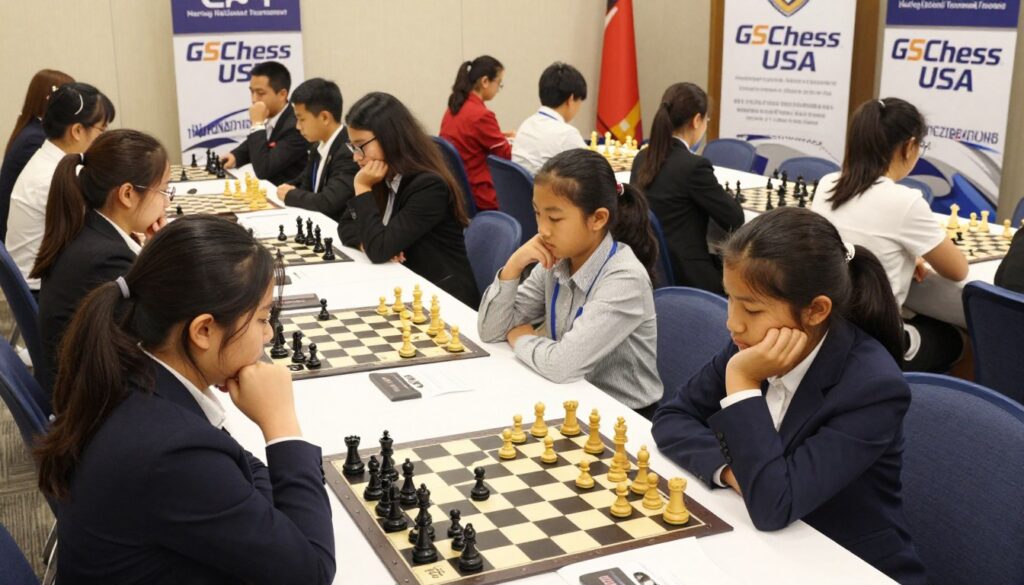
A vibrant scene of the Haring National Tournament chess event, showcasing a dynamic competition atmosphere. In the foreground, a diverse group of young female chess players, dressed in professional business attire, intensely focus on their chessboards, deep in thought. In the middle, neatly arranged tables feature a mix of chess pieces, with competitive matches underway, some players analyzing moves on large notepads. The background reveals banners and posters displaying "GSChess USA," adding to the sense of excitement. Soft, even lighting casts gentle shadows, enhancing the concentration and seriousness of the tournament. An angle from slightly above captures the players’ expressions and the intricate details of the chess pieces, embodying the spirit of intelligent competition and dedication of young female talent in chess.

Time Controls and Fair Play Standards

Time control: Games use a G90 +30 setup — 90 minutes plus a 30-second increment per move. This gives players time to think and finish strong.

Rounds: The field plays six Swiss rounds. Every player must record moves on a scoresheet for each game. Bring your own clock and know how to set it!

“Fair play matters. Play with respect, follow rules, and report issues to an arbiter immediately.”

We enforce strict fair play standards. Electronic aid is banned. Arbiters review games and may check equipment. Membership must be valid to compete as a representative. For full rules and registration info, see the official event information and rules.

Item Detail Why it matters
Time control G90 +30 Encourages deep play and fewer time scrambles
Rounds 6 Swiss Finds consistent winners across multiple games
Scoresheets Required every game Supports fair results and post-game review
Equipment Bring clock Knowing clock use prevents delays and penalties

Conclusion

,Step into a national spotlight where every state representative brings heart, focus, and a chance at scholarship rewards! This chess event invites curious players to learn fast, play fair, and enjoy every round.

Every player grows here. You can raise your rating, meet rivals who become friends, and aim to be the next winner. Debsie — the #1 chess class provider — supports your path with coaching and tools.

Ready to register or check regional details? See the Region VI dates and registration for practical info and next steps. Good luck — we can’t wait to see you shine at the national championship!

FAQ

What is the Haring Tournament of Girls State Champions?

The Haring national event is a national scholastic chess championship for top girls who earned state-level titles. It celebrates competitive play, sportsmanship, and offers learning and scholarship opportunities for promising young players!

Who was Ruth Haring and why is this event named after her?

Ruth Haring was a respected chess leader and Women International Master who promoted chess education and inclusion. The event honors her legacy by encouraging girls to play, learn, and grow through chess and STEM connections.

How do players qualify to represent their state?

State affiliate organizations nominate winners from state championship events. Each state follows its own selection process, usually sending the top finisher or a state champion to the national level as their representative.

What are the residency and age requirements?

Eligible players must meet their state’s residency rules and the event’s age or grade guidelines. Most participants are school-age girls who won state scholastic titles in the current school year. Check your state affiliate for exact details.

What is a host state alternate and when is one used?

The host state alternate is a backup player chosen by the host to fill open slots or replace a nominated participant who can’t attend. Alternates ensure full sections and smooth event operation.

What format and time controls does the event use?

The championship typically uses standard scholastic time controls, with classical or long rapid games to give players ample thinking time. Exact controls and the number of rounds are listed in the official event information.

What fair play and conduct rules are enforced?

Strict fair play standards apply, including anti-cheating measures, sportsmanship rules, and tournament regulations from governing bodies. Players must follow onsite rules, use approved equipment, and respect arbiters’ decisions.

Are there prizes, scholarships, or awards for winners?

Yes! Winners earn national recognition, trophies, and often scholarships or membership benefits from chess organizations. Many events also offer awards for top finishers, grade-based prizes, and special recognitions.

How do I register or get more information?

Registration details, host information, and event schedules are published by the national organizer and state affiliates. Visit the official event page or contact your state chess association for registration forms and deadlines.

Is this event open to players of all ratings and skill levels?

The field is made up of state champions and invited representatives, so most participants are highly skilled. Rating varies, and sections are set to ensure competitive rounds and fair pairings for all entrants.

Can parents and coaches attend and support their players?

Absolutely! Parents and coaches are encouraged to attend. The event offers a family-friendly environment with volunteer roles, spectator areas, and resources for supporting young competitors.

How does this championship connect chess to STEM learning?

The event highlights critical thinking, problem solving, and strategic planning—skills central to STEM. Workshops, guest speakers, and learning resources often accompany the competition to inspire further academic growth.

Will winners receive national titles or advancement to other tournaments?

Champions earn national titles and recognition. In some years, top finishers may be invited to other national events or considered for scholarships and membership programs tied to broader scholastic chess opportunities.